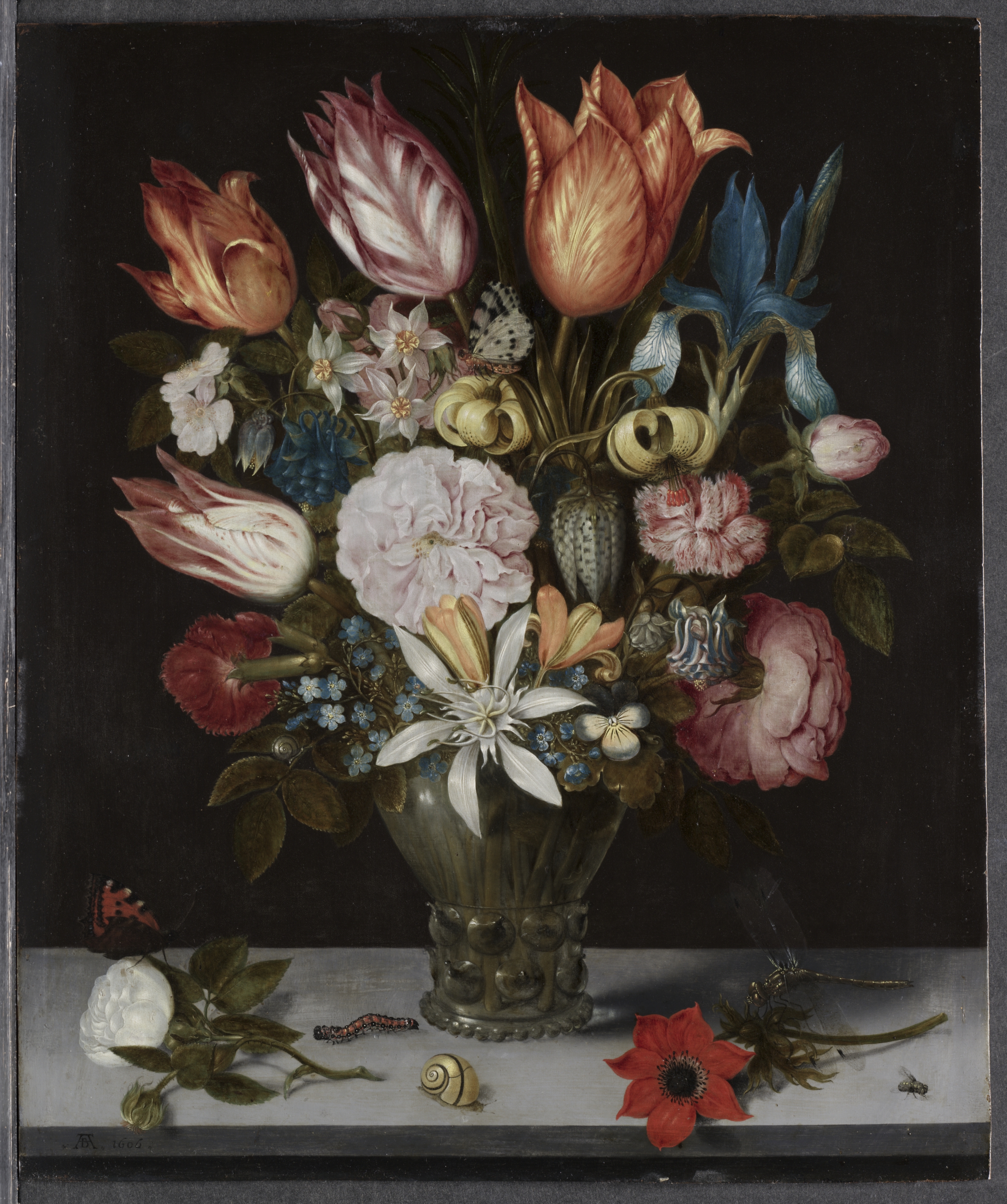
I couldn’t resist museum-going. I just can’t!
Yes, for the second time in a row, I’m posting about museums. And no, I don’t know if this trend will stop anytime soon! But there’s an inherent sense within me that naturally attracts me to a museum. But this post isn’t about what’s art again, but rather about something I touched on in Tuesday’s post: beauty.
Humans strive to live in a world filled with what they deem “beautiful” and become surrounded by that beauty as often as possible. Beauty has its foothold in almost every aspect of a person’s life — only second to love, of course — and all people strive to seek beauty not only on the outside but within themselves as well. Some obsess over it, others deign that pursuit for something rougher or more realistic. And the thing about beauty is that it is in everything we encounter, whether you believe that or not; nature, music, people’s personalities — all things exude some sort of beauty, depending on who finds it.
I don’t want to go on with what I find beautiful (even though a good majority of philosophers love to talk about aesthetics to degrees I wouldn’t put on others) since I think describing what I think is beautiful doesn’t truly let beauty have full autonomy. Beauty, therefore, speaks for itself, whether we find it aesthetically pleasing or not. Embracing the fact that beauty is fluid and ever-evolving as time progresses helps us to recognize how important it is to realize the beauty around us. And here’s the best part: beauty might not necessarily be what the populace deems “beautiful!”
In his Third Critique in the Critique of Judgement, German philosopher Immanuel Kant posits the following:
“The judgment of taste is…not a judgment of cognition, and is consequently not logical but aesthetical, by which we understand that whose determining ground can be no other than subjective. Every reference of representations, even that of sensations, may be objective (and then it signifies the real [element] of an empirical representation), save only the reference to the feeling of pleasure and pain…” (Section 1)
Talking about objective beauty, as Kant explains, is therefore meaningless since objective beauty would need to go through the rigors of empiricist thought. And since beauty doesn’t really fit into those boundaries, there is no realistic, ultimate beauty. It is, however, in the territory of the subjective!
When taken in a subjective sense, beauty has plenty of stretching room, since all people naturally consider different things/concepts/people inherently more beautiful than other things/concepts/people. This doesn’t require the same empirical scrutiny since the human mind isn’t within our reach (physically, at least). What goes on in a person’s head requires so much more nuance, analysis, and introspection (which in itself requires good communication and general empathy) that even our mind can’t wrap around that.
Rather, in order to get a better idea of how we deem things as beautiful, we must go back to the beginning stages of our lives, since our upbringing determines quite a bit about what we consider to be beautiful.
Thankfully, there’s a Dane out there who could better illustrate this: Søren Kierkegaard and his “existence-spheres.” He posits in his Either/Or that all humans (surprisingly, him included!) go through three inalienable stages in life:
- The Aesthetic, involving the earliest, natal stages of our lives, where we rely on our senses,
- The Ethical, in which as we grow up, we pursue “tasks” in our lives to fulfill societal duties (what Confucius would consider as “proprieties”) and
- The Religious, where man seeks for something higher in their lives, not exclusively restricted to a religious understanding.
However, for the sake of brevity (and my fingers), we’ll only discuss the first stage.
In our youth, we try our best to predispose ourselves to the world around us and seek to discover what we consider unfamiliar or strange. Because we haven’t adapted the ability to speak our minds at this anterior stage, we rely on our built-in senses to dictate what is more attractive or strange, good or bad, beautiful or ugly. We discern what is best for ourselves utilizing simple emotional reactions or impulses, regardless of any set-in-stone morals or laws. We haven’t been able to develop the concept of obeying authority, so our pursuits are essentially endless, something a good chunk of people still hold to be accurate and embrace later on.
Kierkegaard uses the character of Don Juan —as retold in his mythos and tall tales — in order to explain what it means to live the life of what he calls the “aesthete.” He notes how this is the case while discussing the concept of the “musical-erotic” in Mozart’s operas:
“The musical Don Juan enjoys the satisfaction of desire; the reflective Don Juan enjoys the deception, enjoys the cunning…”
In the eyes of Don Juan, the aesthete is naturally predisposed to enjoy the pleasures of life, indulges in them, and uses whatever kind of trickery or deception in order to find more of it. Of course, being an extreme, this isn’t mutually true of all people who are inclined to live a more aesthete life, but there are common traits between aesthetes that point towards these behaviors. Kierkegaard expounds on these traits, saying:
“About him he uses an expression which in truth, boldness, and conciseness is almost equal to Mozart’s stroke of the bow. He says he could so talk with a woman that, if the devil caught him, he could wheedle himself out of it if he had a chance to talk with the devil’s grandmother. This is the real seducer; the aesthetic interest here is also different, namely: how (I. E., praxis), the method.”
Our methods of achieving and pursuing beauty, therefore, might just be more important than what we deem beautiful!
However, as with all tangential things, all passes away, and there’s nothing you nor I could do about that. Dealing with the inherent fact that all the things we consider beautiful will objectively die off and coming to terms with the temporal nature of beauty is essential to how we should pursue it. Yet despite this fact, people love to hold on to what is beautiful, always reluctant to letting it pass, outside of our control. Is beauty, then, some form of memento mori? One could assume that.
The issue of death is the one thing philosophers cannot let go of, whether they embrace it or fear its eventual arrival at our doors. Nevertheless, beauty has something up its sleeve: it only begets beauty.
As long as humans exist, beauty as we see it will carry on, as it does to this day — despite the myriad forms of ugliness within the world — and eventually will in the future. That prospect, at least, should satisfy us. ❧